
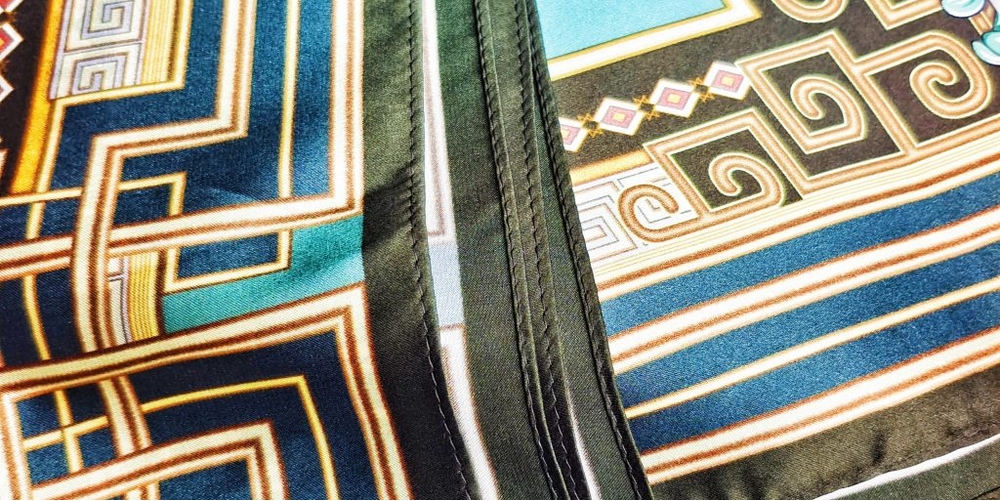
Scarf Hemming: 4 Best Practices for Elegant Rolled Edges
As a high-end fashion accessory, the craftsmanship of scarves reflects sophistication and elegance in every detail. While the fabric quality and print design are paramount, the hemming process plays a crucial role in not only the product’s durability but also its overall aesthetic appeal and perceived value. A poorly finished edge can detract from even the most exquisite silk, whereas a masterfully executed hem elevates it to a work of art.
This article will detail four distinct kinds of scarf hemming craftsmanship: Hand-rolled Hemming, Machine Hemming, Baby Hemming, and Triangle Stitch. Each technique offers a different balance of cost, speed, and luxury, making them suitable for various market segments. Whether you are a designer launching a new collection or a brand looking to refine your production, understanding these options is key.
If you want to know more about the manufacturing process, please visit our 製品製造 category.
1. Scarf Hemming:Hand-Rolled: The Ultimate Elegance
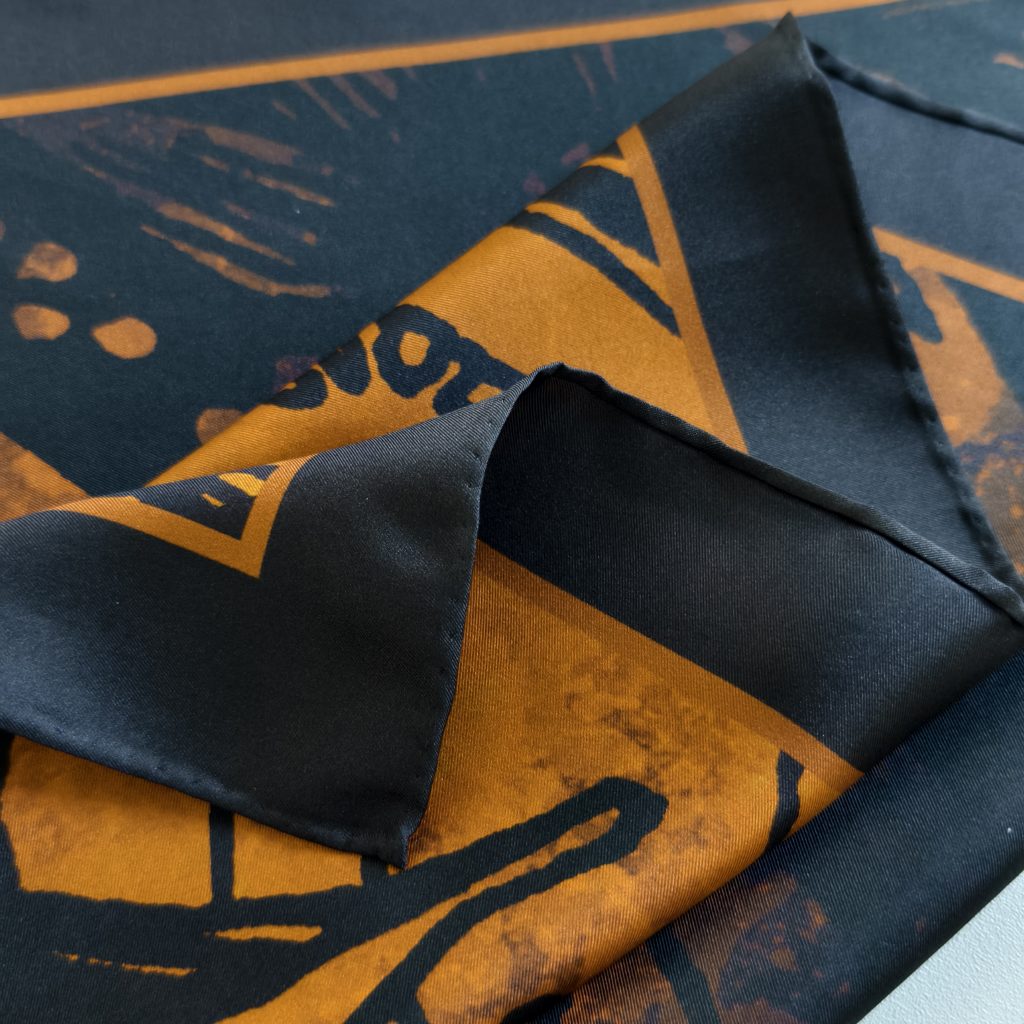
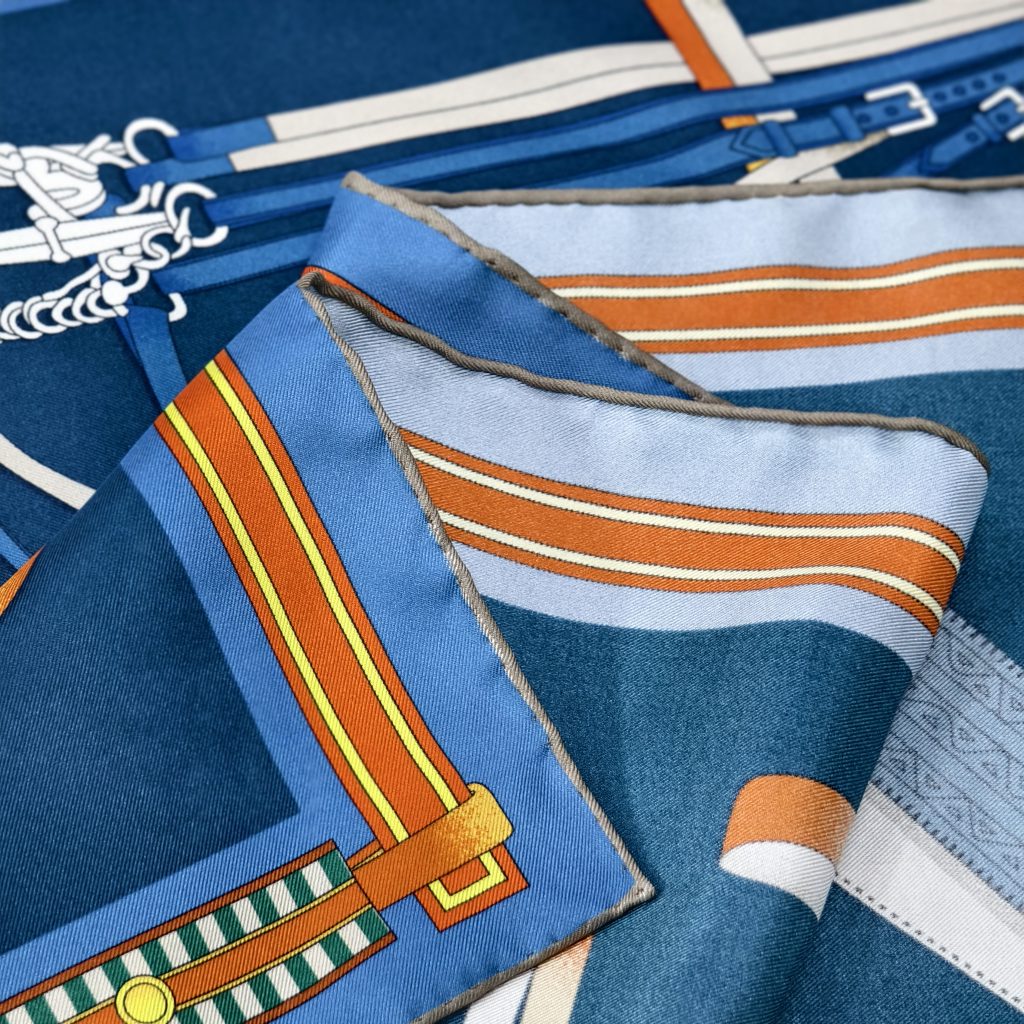
For mulberry silk scarves, hand-rolled hemming (often called “roulotté” in French) is the undisputed gold standard of luxury. It is a time-consuming, artisanal process that cannot be replicated by machines. The artisan carefully rolls the edges of the scarf inward with their fingers, typically creating a tight, cylindrical roll with a width ranging from 0.5 to 1 cm (approximately 0.2 to 0.4 inches). This specific width ensures the hem is substantial enough to drape well but delicate enough not to look bulky.
Using a very fine needle and matching silk thread, the artisan then sews the rolled edge with a blind stitch. The goal is for the stitches to be nearly invisible on the front side of the scarf, creating a seamless, fluid border. This technique requires significant skill and patience; a single scarf can take 30 to 45 minutes to hem by hand.
This method is commonly used for solid-color or simple-patterned mulberry silk scarves, highlighting purity and elegance. It is the preferred choice for top-tier luxury brands like Hermès. Learn more in our tutorial: How to Hand-roll the Edges of a Scarf.
2. Machine Hemming: Efficiency and Neatness
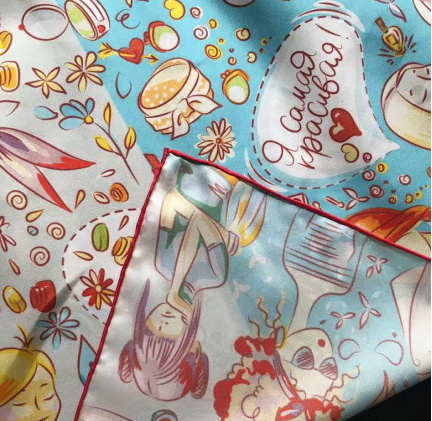
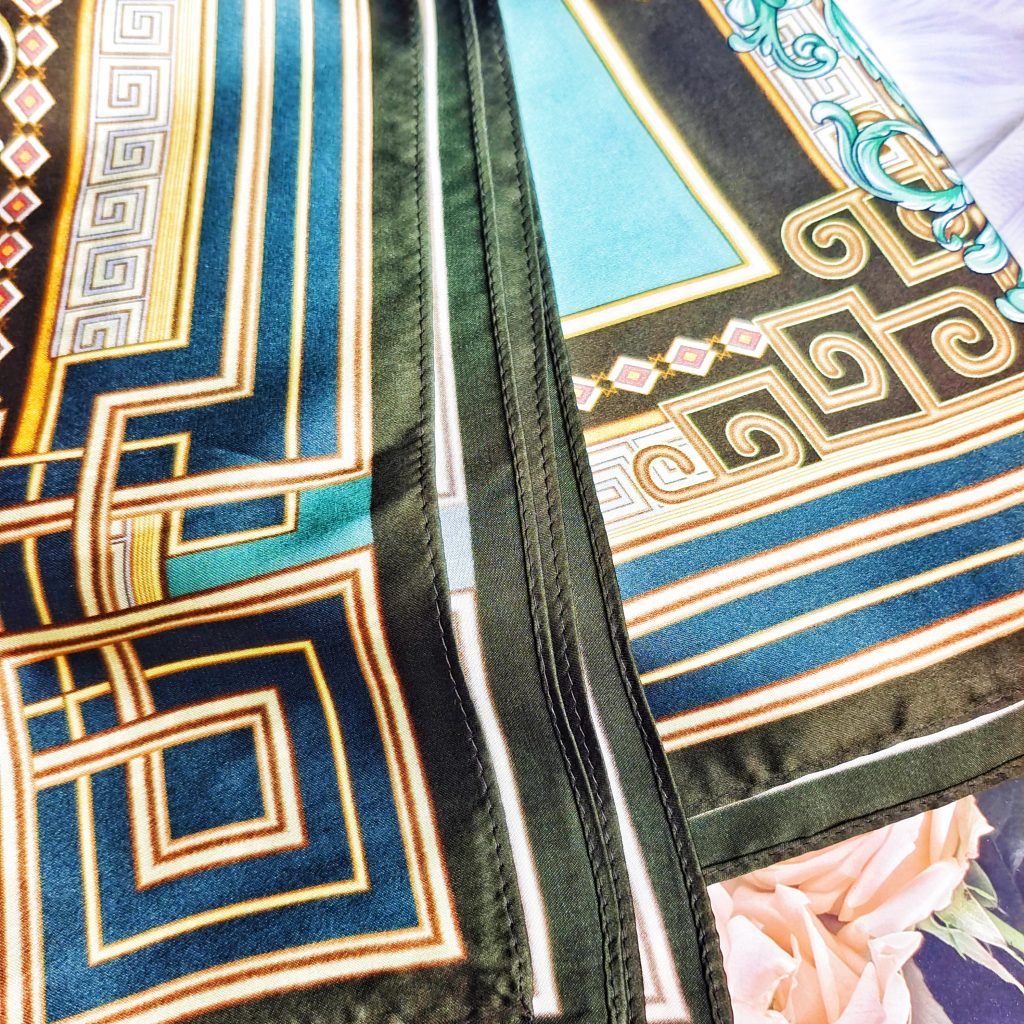
In large-scale production, machine hemming is indispensable for balancing cost and quality. Using a specialized flatbed sewing machine equipped with a hemming foot, the edges are quickly folded and stitched flat. Unlike the rolled effect of hand hemming, machine hemming typically results in a flat, crisp fold. The width is generally uniform, often around 1cm, providing a clean and structured look.
This method is highly efficient and significantly reduces production time and labor costs. It is ideal for mass production of custom garments, promotional scarves, or mid-range fashion accessories where durability and uniformity are prioritized over artisanal flair. While it lacks the fluid drape of a hand roll, modern machines can produce very neat, straight, and durable hems that are perfectly acceptable for many applications.
3. Baby Hemming: The Finest Delicate Edge
Baby hemming is a finer, more delicate variation of machine hemming, specifically designed for lightweight and sheer fabrics like silk chiffon, georgette, or cotton voile. The hem width is extremely narrow, typically ranging from just 0.3 cm to 0.6 cm (1/8 inch to 1/4 inch).
It involves folding the fabric edge twice very tightly to completely tuck the raw edge within a tiny, secure fold. This creates a finish that is almost invisible and does not weigh down the fabric, allowing it to maintain its ethereal drape and movement. Baby hemming is technically demanding for a machine process, requiring precise tension control to avoid puckering. It is the preferred choice for summer scarves, beach cover-ups, and delicate shawls where a bulky hem would ruin the aesthetic.
4. Triangle Stitch: A Unique Decorative Touch
Triangle stitch, also known as the dogtooth stitch or blanket stitch variation, creates continuous triangular patterns along the edge of the scarf. This is primarily a hand-rolled technique but with a decorative twist. Instead of hiding the thread, the artisan uses contrasting or complementary thread colors to create visible, rhythmic triangular shapes that secure the rolled edge.
This adds a playful, bespoke element to the scarf, turning the hem itself into a design feature. It is particularly popular for wool or cashmere blend scarves, or for silk scarves with geometric patterns where the jagged edge complements the print. The stitch density and angle can be adjusted to create different visual effects, offering designers a way to add a signature touch to their Docsun Design Pattern requests.
結論
The hemming process is integral to a scarf’s aesthetic appeal and functionality. From the meticulous and elegant hand-rolled hemming that signifies true luxury, to the efficient and neat machine hemming for broader markets, each technique offers unique charm. Baby hemming provides a whisper-light finish for delicate fabrics, while the triangle stitch adds a bespoke decorative flair.
Choosing the right hemming method according to your brand positioning, budget, and design needs can significantly enhance the overall quality of your product. At Docsun, we offer all these options to ensure your vision is realized perfectly. If you need advice on the best hemming for your project, please contact us.
Frequently Asked Questions (FAQ)
What is the best hemming for luxury silk scarves?
What is the difference between machine hemming and baby hemming?
Can I customize the hemming style for my order?

“`